
Introduction
Professional grooming is more than just aesthetics; it plays a vital role in your dog’s overall health and well-being. Regular grooming prevents matting, skin infections, and excessive shedding, while ensuring your dog looks and feels their best. Whether you choose to groom your dog at home or take them to a professional salon, understanding expert techniques and best practices helps maintain a clean, healthy, and happy pet. This guide provides professional dog grooming tips suitable for all breeds and coat types.
Understanding the Importance of Grooming
Grooming affects both the physical and emotional health of dogs. A well-groomed dog enjoys:
- Healthy skin and coat: Regular brushing and bathing distribute natural oils and remove dirt.
- Reduced shedding and matting: Prevents painful tangles and keeps fur manageable.
- Improved hygiene: Clean ears, teeth, and nails reduce the risk of infections.
- Behavioral benefits: Grooming strengthens the bond between owner and dog, building trust and confidence.
Professional groomers emphasize consistency, proper tools, and techniques to achieve these benefits safely.
Assessing Your Dog’s Grooming Needs
Every dog has unique grooming requirements based on their breed, coat type, age, and health.
Short-Coated Breeds
Dogs like Dalmatians, Beagles, and Boxers require minimal grooming. Weekly brushing and occasional baths are sufficient, but nail trimming, ear cleaning, and dental care remain essential.
Long or Flowing Coats
Breeds such as Shih Tzus, Maltese, and Afghan Hounds need daily brushing and regular trims to prevent tangles and matting. Their coats benefit from specialized shampoos and conditioners for softness and shine.
Curly or Wavy Coats
Poodles, Bichons, and other curly-coated dogs require frequent brushing, detangling, and professional trims. Curly coats trap dirt easily, so regular care prevents skin irritation.
Double-Coated Breeds
Dogs like German Shepherds, Huskies, and Golden Retrievers have dense undercoats. Regular deshedding and seasonal grooming are key to preventing matting and reducing shedding.
Wire-Coated Breeds
Terriers and other wiry-coated breeds require hand-stripping or clipping to maintain coat texture. Regular brushing and trimming keep these coats healthy and stylish.
Essential Grooming Tools
Professional grooming relies on using high-quality tools. Here are the essentials:
- Brushes: Slicker, bristle, pin brush, and undercoat rake depending on coat type.
- Combs: Wide-tooth and fine-tooth for detangling and finishing.
- Clippers and Blades: Electric clippers for trims and precision cuts.
- Scissors: Straight, curved, and thinning scissors for shaping and detail work.
- Nail Clippers and Grinders: Maintain proper nail length safely.
- Shampoo and Conditioner: Breed-specific formulas for skin and coat health.
- Ear and Dental Care Tools: Ear-cleaning solution and dog-safe toothpaste.
Using the right tools ensures grooming is effective, safe, and comfortable for your dog.
Brushing Techniques for a Professional Finish
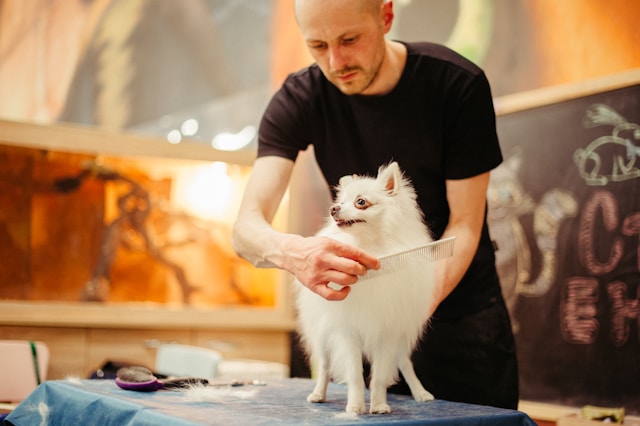
Brushing is the cornerstone of grooming. Professional tips include:
- Short-Coated Dogs: Use a bristle or rubber brush, brushing in the direction of hair growth to remove loose hair.
- Long-Coated Dogs: Work in sections using a wide-tooth comb to detangle, then finish with a slicker brush for smoothness.
- Double-Coated Dogs: Lift the top coat and use an undercoat rake to remove loose fur.
- Curly Coats: Brush in sections to avoid matting. Use a slicker brush and fingers to gently separate knots.
Professional groomers emphasize gentle strokes and patience to prevent discomfort.
Bathing Your Dog Like a Pro
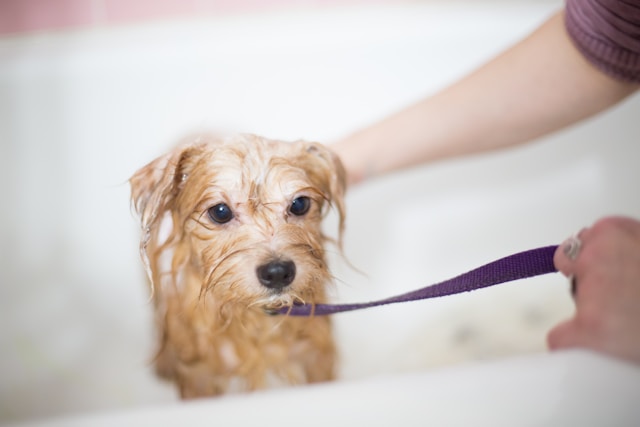
Bathing removes dirt, debris, and odors while maintaining healthy skin.
Steps for a Professional Bath
- Brush your dog before bathing to remove tangles.
- Wet the coat with lukewarm water.
- Apply dog-specific shampoo, lathering thoroughly from neck to tail.
- Rinse thoroughly to prevent residue and irritation.
- Apply conditioner if needed for long or curly coats.
- Rinse again and towel-dry.
- Use a blow dryer on a cool setting, brushing while drying for volume and shine.
Professional groomers emphasize proper water temperature, gentle handling, and full rinsing to protect the coat and skin.
Nail Trimming and Paw Care
Professional groomers regularly trim nails to prevent overgrowth, which can cause discomfort or affect gait.
- Trim small amounts at a time to avoid cutting the quick.
- Use a nail grinder for smooth edges.
- Inspect paw pads for cracks or foreign objects and apply paw balm for protection.
Maintaining nails and paws is a critical part of overall grooming.
Ear and Eye Hygiene
Keeping ears and eyes clean prevents infections and irritation.
- Ears: Use a veterinarian-approved solution, wiping only the visible ear surface. Avoid inserting cotton swabs deep into the canal.
- Eyes: Gently clean around the eyes with a damp cloth or dog-safe wipes. Trim hair near the eyes to prevent irritation and tear staining.
Coat Trimming and Styling
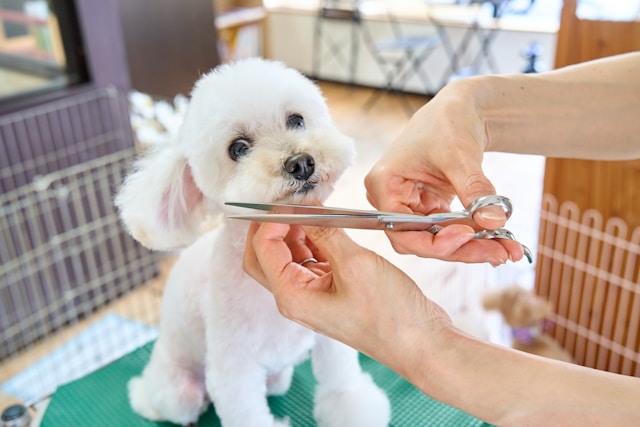
Professional grooming often involves trimming and shaping the coat to enhance appearance and comfort.
- Long and curly coats: Trim regularly every 4–8 weeks.
- Wire coats: Hand-strip to maintain natural texture.
- Double coats: Focus on brushing and deshedding rather than shaving, which can damage the coat.
- Sanitary areas: Always trim around the paws, tail, and underbelly to maintain hygiene.
Skin Health and Coat Maintenance
Healthy skin is essential for a shiny coat. Tips include:
- Use high-quality shampoos and conditioners.
- Brush regularly to distribute natural oils.
- Provide a balanced diet with omega-3 and omega-6 fatty acids.
- Monitor for signs of allergies, dryness, or irritation.
Professional Grooming Frequency
The frequency of grooming depends on the breed and coat type:
- Short coats: Every 4–6 weeks for baths and basic care.
- Long or curly coats: Every 4–6 weeks for trims and styling.
- Double coats: Seasonal grooming plus monthly brushing.
- Wire coats: Every 6–8 weeks for hand-stripping and trimming.
Final Tips from Professional Groomers
- Always be patient and use positive reinforcement.
- Groom in a quiet, comfortable environment.
- Inspect your dog for lumps, parasites, or skin issues during grooming.
- Maintain consistent grooming schedules to prevent matting and stress.
- Consult a professional if unsure about cutting, stripping, or styling techniques.
Conclusion
Professional grooming combines care, technique, and attention to detail to keep dogs healthy, comfortable, and visually appealing. Understanding coat types, using proper tools, and maintaining regular routines ensures your dog looks and feels their best. Whether grooming at home or visiting a salon, following these expert tips promotes a healthy coat, good hygiene, and a strong bond between you and your pet. Consistency, patience, and proper care make professional-level grooming achievable for every dog owner.