
Introduction
Grooming your dog at home is one of the most effective ways to maintain their health, comfort, and appearance. Regular grooming not only keeps their coat clean and shiny, but also helps prevent skin issues, matting, and discomfort. While many owners choose to visit professional groomers, learning to groom your dog yourself can save money, strengthen your bond, and ensure your pet receives consistent care. This guide provides a complete, step-by-step approach to grooming your dog at home, with specific considerations for different coat types and breeds.
Understanding Your Dog’s Coat Type
Before beginning any grooming routine, it’s important to understand your dog’s coat type. Different breeds require different grooming methods, tools, and timelines.
- Short-Coated Dogs (Beagle, Boxer, Dalmatian): Require minimal brushing but benefit from regular baths and nail care.
- Double-Coated Dogs (German Shepherd, Husky, Golden Retriever): Have thick undercoats that shed heavily; require routine deshedding.
- Curly-Coated Dogs (Poodle, Bichon Frise): Need frequent brushing and regular trimming to prevent matting.
- Long-Coated Dogs (Shih Tzu, Maltese, Afghan Hound): Require daily brushing and careful trimming.
- Wire-Coated Dogs (Terriers): Often need hand-stripping or specialized trimming.
Knowing your dog’s coat helps you select the right tools and avoid damaging the fur or skin.
Essential Grooming Tools to Have at Home
A proper grooming setup makes the process easier and more effective. Here are the tools most dog owners should have:
- Slicker brush
- Pin brush
- Metal comb
- Deshedding tool
- Dog-safe shampoo and conditioner
- Dog-friendly grooming scissors
- Electric clippers (for breeds that require trimming)
- Nail clippers or grinder
- Ear-cleaning solution
- Towels and a blow-dryer with a cool setting
- Toothbrush and dog toothpaste
Investing in the right tools ensures safety and comfort for both you and your dog.
Step-by-Step Grooming Guide
1. Brushing the Coat
Brushing is the foundation of home grooming.
- Short coats: Brush once or twice a week using a bristle or rubber brush.
- Long or double coats: Brush daily to remove loose fur and prevent tangles.
- Curly coats: Use a slicker brush to work through curls thoroughly.
Start at the neck and move toward the tail, then down the legs. Always brush in the direction of hair growth. For mats, gently use a dematting tool or slicker brush, working slowly to avoid pain.
2. Bathing Your Dog
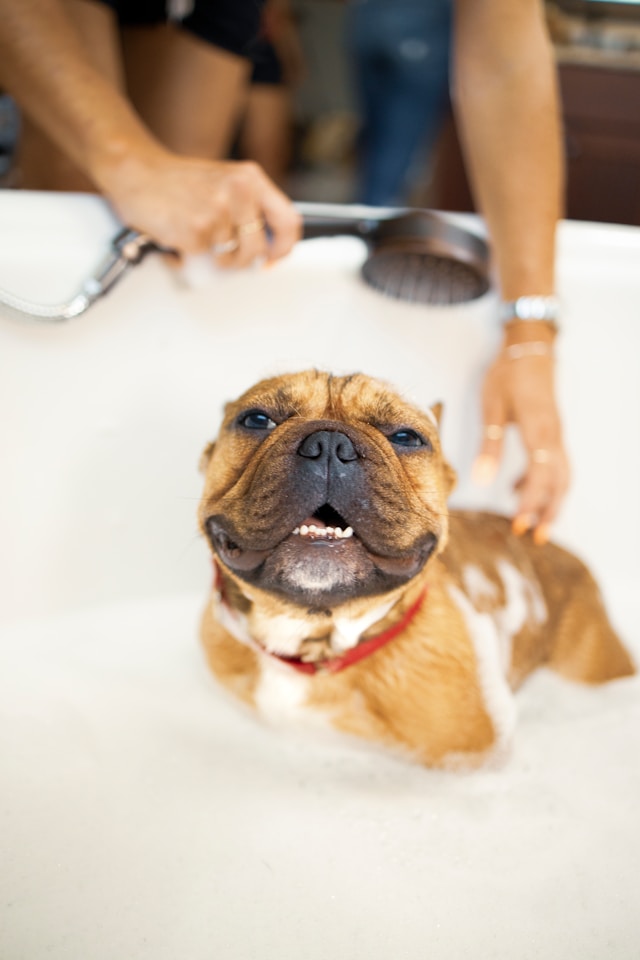
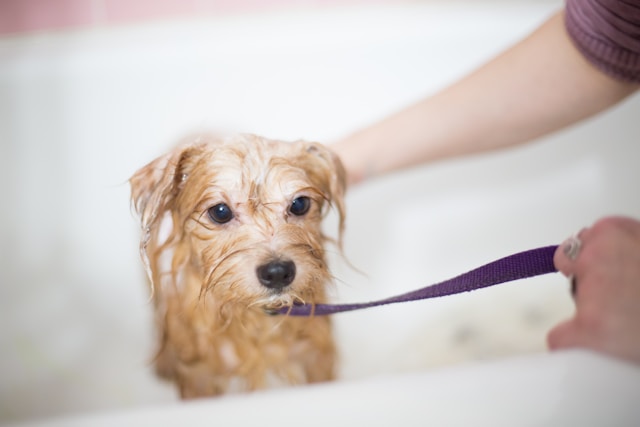
Bathing frequency depends on the breed and lifestyle, but most dogs do well with a bath every 4–6 weeks.
Steps for a safe and effective bath:
- Brush your dog before bathing to remove knots.
- Use lukewarm water and wet the coat thoroughly.
- Apply dog shampoo and lather from neck to tail.
- Avoid getting shampoo in the ears or eyes.
- Rinse thoroughly to prevent skin irritation.
- Apply conditioner for long-coated or curly breeds.
- Rinse again until no product remains.
Dry your dog with a towel, then use a blow-dryer on a cool or low-warm setting if needed.
3. Drying and Brushing Again
After a bath, brushing becomes even more important. For thick or curly coats, drying while brushing helps avoid tangles and promotes a smooth finish. Make sure the coat is fully dry, especially in double-coated breeds, to prevent moisture from becoming trapped and causing skin issues.
4. Nail Trimming
Overgrown nails can cause pain and posture problems. Trim your dog’s nails every 2–4 weeks.
Tips for safe trimming:
- Hold the paw gently but firmly.
- Trim only the tip of the nail to avoid cutting the quick.
- For dark nails, trim slowly in small sections.
- If you prefer, use a nail grinder for smoother edges.
Reward your dog after every paw to build positive associations.
5. Ear Cleaning
Clean ears once every 1–2 weeks, or more often for floppy-eared breeds.
Steps:
- Apply ear-cleaning solution to a cotton pad.
- Wipe only the visible parts of the ear.
- Avoid inserting anything deep into the ear canal.
- Check for redness, odor, or discharge, which may indicate infection.
6. Teeth Brushing
Dental care is often overlooked but essential. Brush your dog’s teeth several times a week using dog toothpaste and a soft-bristled toothbrush. Focus on the outer surfaces of the teeth, especially the back molars where plaque builds most.
7. Trimming and Clipping
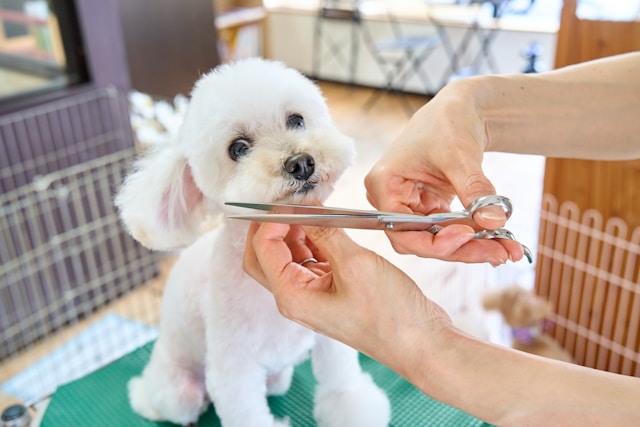
Not all dogs require haircuts, but many breeds benefit from regular trimming.
- Long-coated and curly breeds: Trim every 4–8 weeks.
- Areas to focus on: face, paws, sanitary areas, tail, and around the ears.
If using clippers:
- Choose the right guard length for your dog’s coat.
- Move the clippers in the direction of hair growth.
- Work slowly to prevent uneven spots or nicks.
Dogs that require full-body trims (like Poodles or Shih Tzus) may need breed-specific styles. Start with simple home trims and consider professional grooming for complex cuts.
Grooming Steps for Specific Coat Types
Short-Coated Breeds:
These dogs require low maintenance. A quick weekly brushing, monthly bath, and regular nail and ear care are usually enough.
Double-Coated Breeds:
Brush thoroughly before and after the bath. Use a deshedding tool during shedding seasons. Never shave a double coat, as it can damage the natural insulation.
Curly-Coated Breeds:
Brush daily to prevent matting. Use clippers every 6–8 weeks to maintain shape and hygiene.
Long-Coated Breeds:
Daily brushing is necessary. Use conditioner after every bath and dry the coat completely before brushing.
Wire-Coated Breeds:
May require hand-stripping to maintain coat texture. This process removes dead hair by hand and may take time to master.
Safety Tips for Home Grooming
- Always be patient and gentle.
- Stop if your dog shows signs of stress or discomfort.
- Keep grooming sessions short, especially for puppies.
- Use treats and praise throughout the process.
- Ensure tools are clean and in good condition.
- Avoid using human grooming products.
Conclusion
Grooming your dog at home is a rewarding routine that improves their health, comfort, and overall happiness. By learning the correct techniques for brushing, bathing, trimming, and nail care, you can maintain your dog’s hygiene while strengthening the bond between you. Whether your dog has a short, long, curly, or double coat, following a consistent grooming schedule ensures they stay clean, confident, and healthy. With the right tools and patience, grooming can become a positive experience for both you and your pet.